
If there was ever a living, breathing example of getting better with age, it’s hard to find a better example than crocodilians. This group—which includes crocodiles, alligators, caimans, and gharials—has existed for over 80 million years, with its broader evolutionary lineage dating back hundreds of millions of years farther. Crocodilians share some characteristics and adaptations that have helped them outlive even dinosaurs, such as a special skin flap seal in their throat that allows them to open their mouths underwater without drowning. Something of a living submarine, saltwater crocodiles, which may grow to more than 20 feet long, can stay submerged for up to an hour at a time. They even have a way to cool off despite not being able to sweat: they open their mouths wide—which is called “gaping,” and release heat.
For every similarity, however, there is a physical trait or adaptation that sets crocodilians apart, such as alligators and crocodiles. Alligators, for example, tend to have wide, U-shaped, rounded snouts, while crocodiles tend to have longer, more pointed, V-shaped snouts. What’s the right bite? For crocodiles, the fourth tooth on the lower jaw sticks up over the upper lip, so you can see it when their mouth is closed. In alligators, this fourth tooth is covered up. When it comes to habitats, crocodiles have special glands in their tongues that can get rid of excess salt, so they tend to live in saltwater habitats such as mangrove swamps and estuaries. Alligators do not have these glands, so they seek out freshwater habitats. However, no matter the species, all crocodilians are fascinating in their own way. “With 26 species of them it is interesting how different they can be,” says Brett Baldwin, curator of herpetology and ichthyology at the San Diego Zoo. “There is a wide range in size, behaviors, and diet.” For the chance to experience some of these prehistoric predators for yourself, you don’t need a time machine—simply head to the San Diego Zoo.
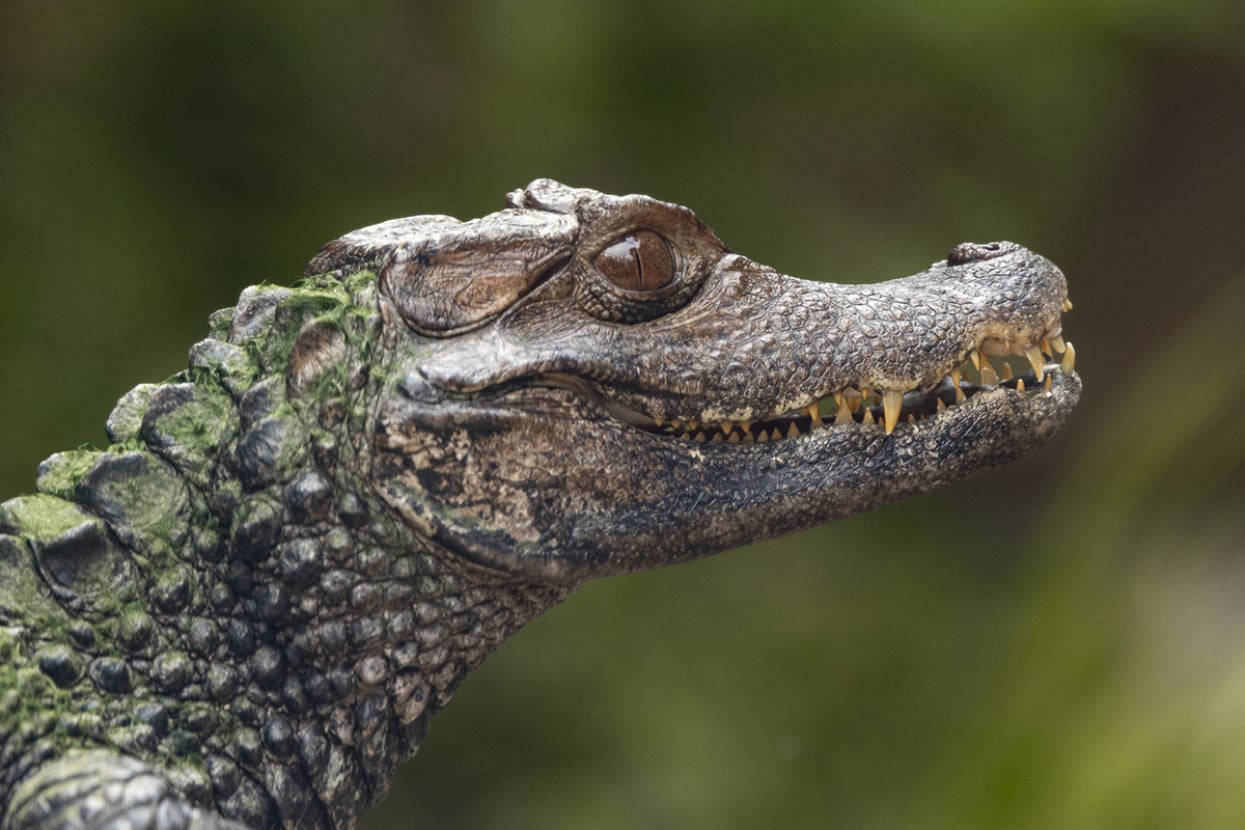
Cuvier's dwarf caiman
Small(er) But Mighty
Jake’s Cool Critters at the Zoo’s Denny Sanford Wildlife Explorer Basecamp is home to the smallest living member of the alligator family in the Americas, Cuvier’s dwarf caiman. Native to the Amazon and Orinoco basins, Cuvier’s dwarf caimans measure 4.9–6.6 feet from snout to tail (females are smaller than males). They are big enough to hunt down prey such as beetles and crustaceans; yet small enough to sunbathe in trees.
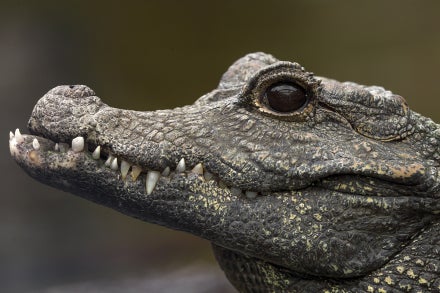
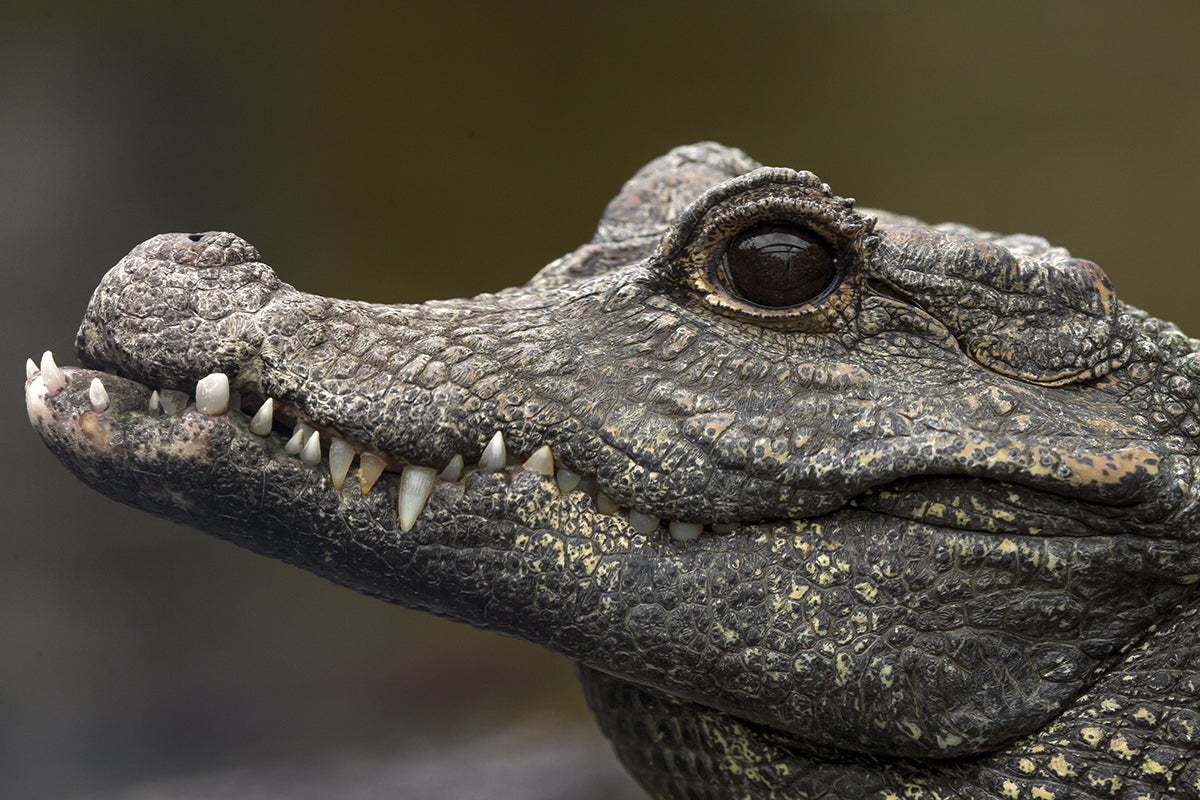
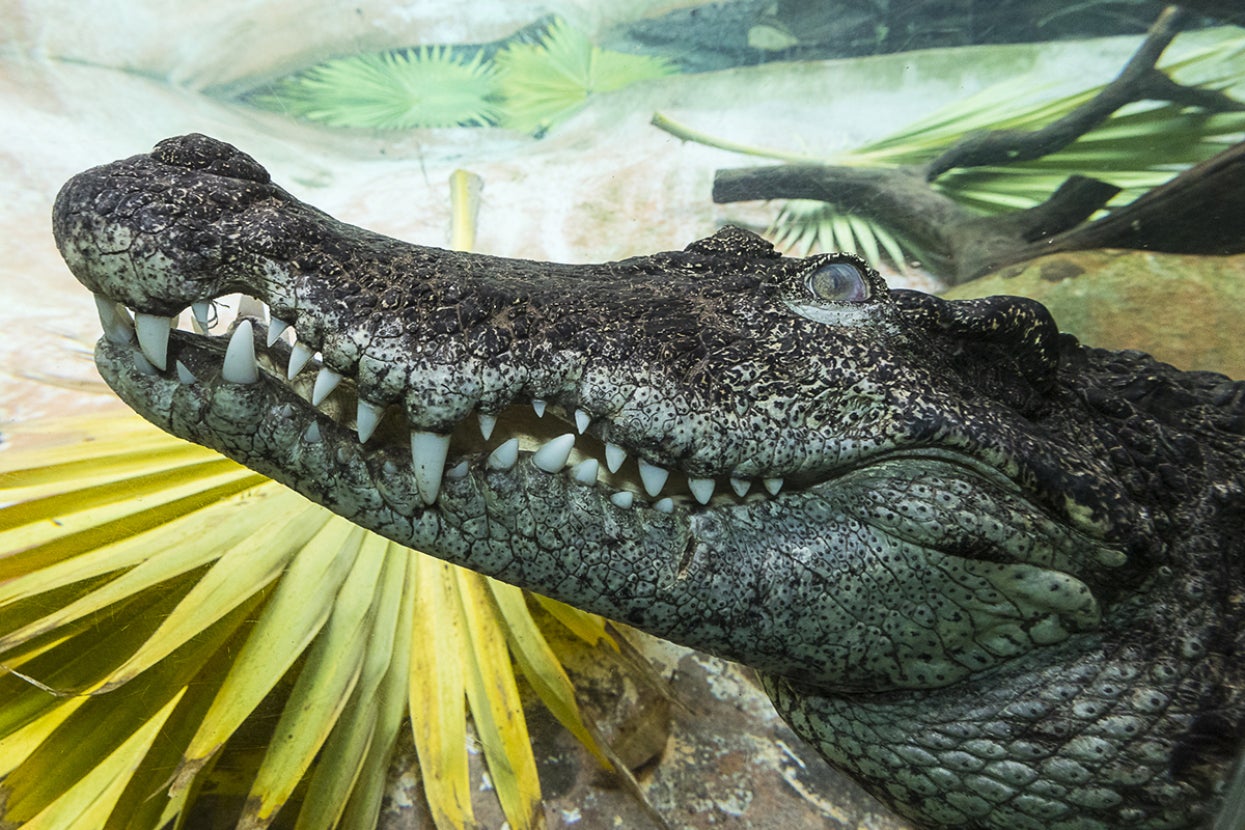
At the Zoo’s Conrad Prebys Africa Rocks, African dwarf crocodiles share a West African Forest habitat with Gaboon forest turtles and cichlid fish. The smallest species of crocodile in the world, African dwarf crocodiles can grow to five feet in length and are known for their bony osteoderm-covered backs and short, blunt, rounded snouts. This species is listed as Vulnerable by the International Union for Conservation of Nature (IUCN).
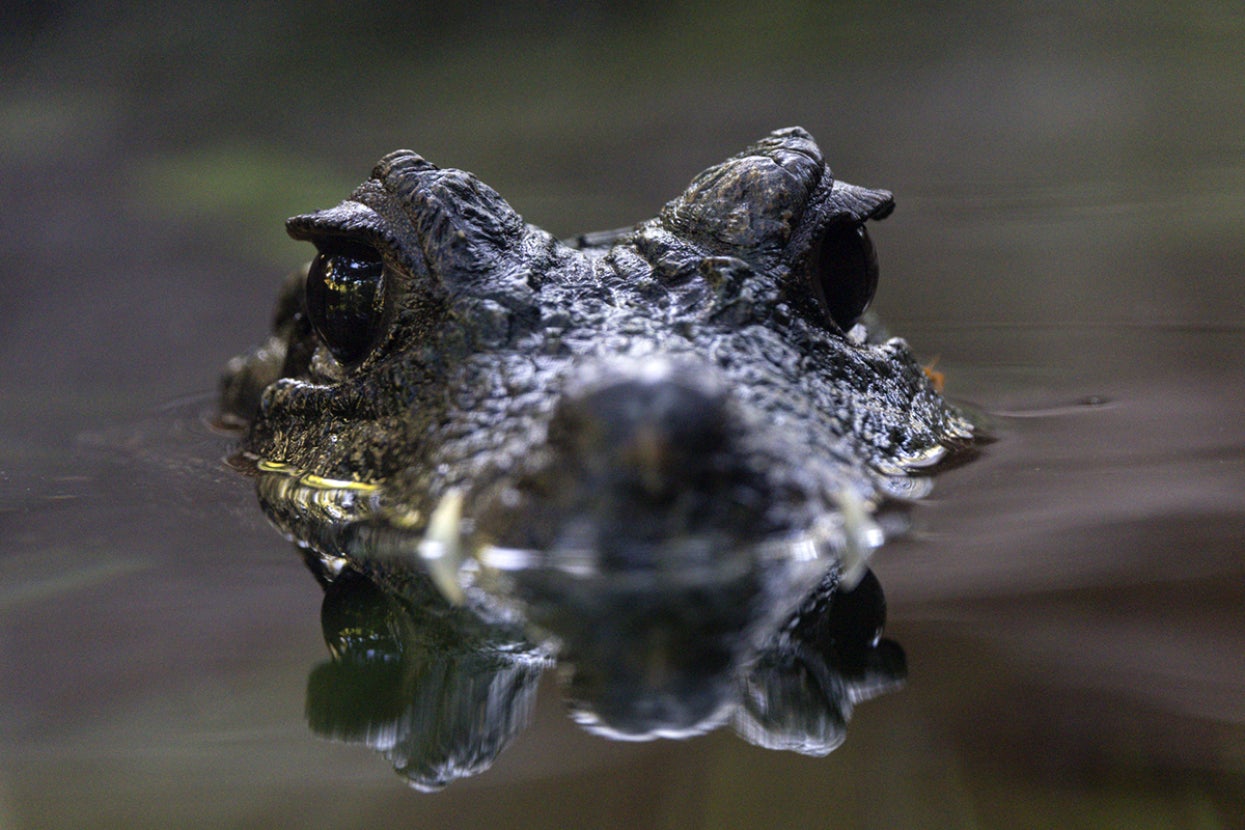
African dwarf crocodile
Getting Bigger
Gharials (also known as fish-eating crocodiles) are critically endangered and arguably the most easily recognizable crocodilian at the Zoo. Their long, slender snouts contain about 100 sharp teeth that they use to catch fish near the river bottom. “Watching gharials hunt fish is absolutely amazing,” says Brandon Scott, wildlife care manager for herpetology and ichthyology at the Zoo. “They can lie perfectly still at the bottom of their habitat or just below the surface, waiting for the perfect moment. As a fish swims by, specialized sensory organs along their snout detect even the slightest vibrations in the water. Then, wham! In a split second, their long, narrow jaws snap shut, and those teeth act like spears, grabbing the fish before it even knows what happened.” Male gharials develop a bulb at the end (called a ghara) that they use to make whistling or buzzing sounds to attract females. Female gharials can reach up to 15 feet in length, males up to 21 feet. Take a stroll down Reptile Walk on the Zoo’s Reptile Mesa and experience the fascinating group of Indian gharials and their turtle habitat-mates.
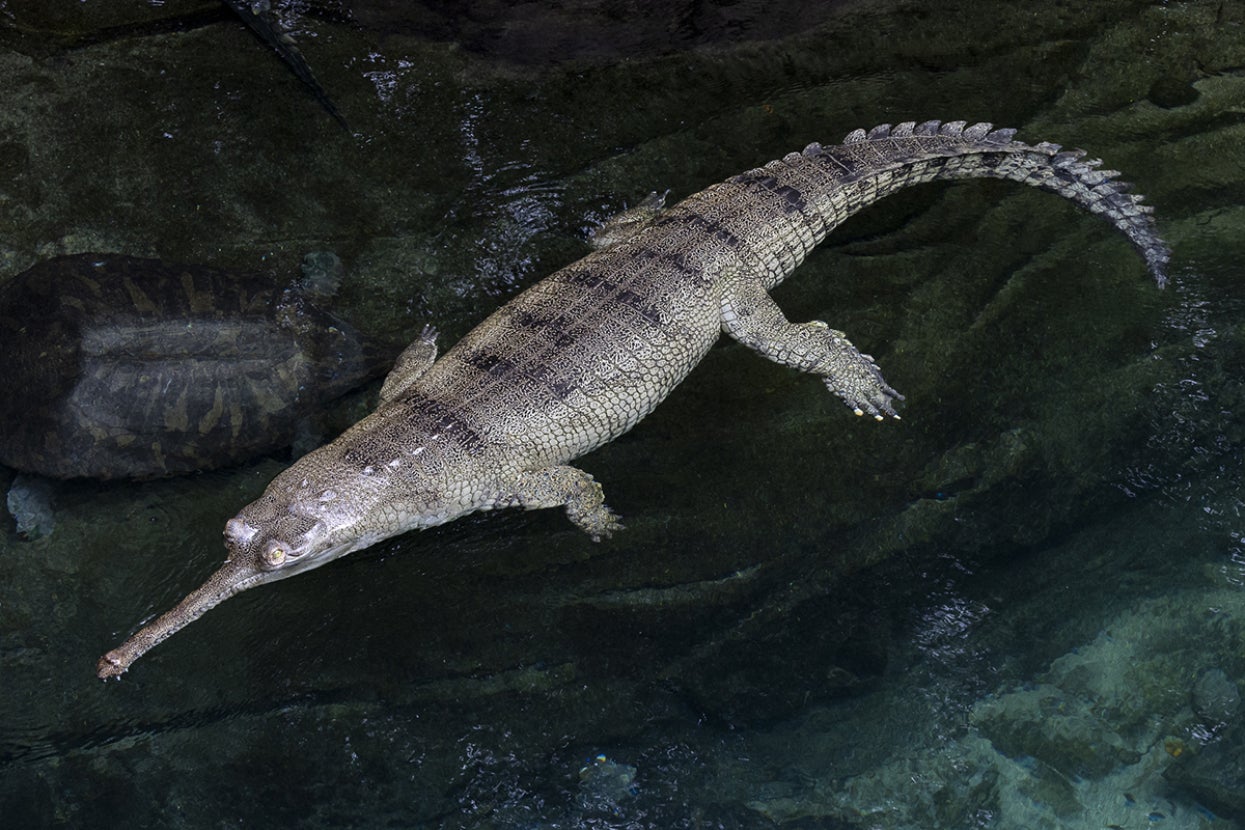
Gharial
Before you leave Reptile Walk, you can spend time with the most endangered of all crocodilian species, the Chinese alligator. As with all crocodilians, from nose to tail and belly to back, hard plates called osteoderms protect this relatively petite alligator (they top out at 7 feet long; their American brethren can reach 15 feet!). Even their eyelids have these bony plates under the skin. Chinese alligators use their snout and strong, clawed front feet to dig burrows in the banks of streams.
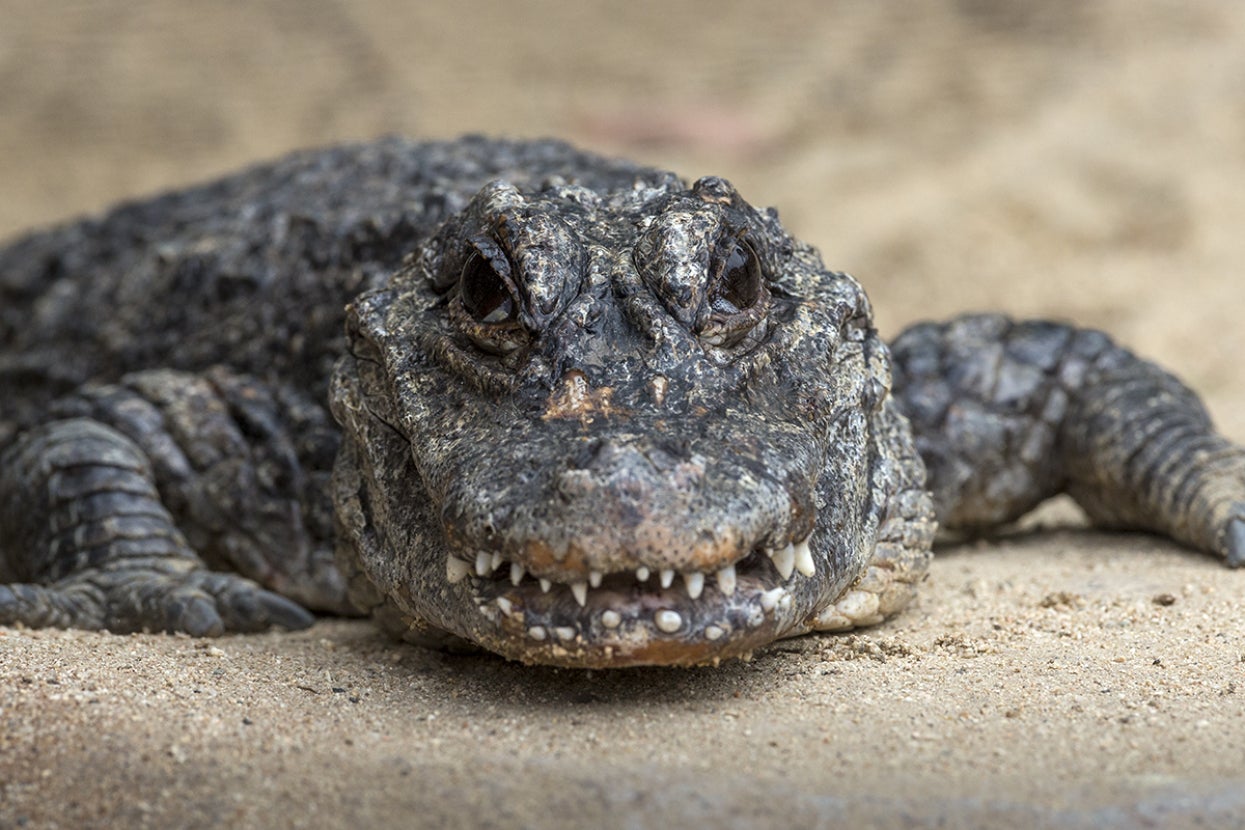
Chinese alligator
A critically endangered freshwater species native to Southeast Asia, the Siamese crocodile is darkish-green in color and has a broad, relatively smooth snout with a bony ridge behind each eye. Most adult males reach up to 10 feet in length, although up to 13 feet in not unheard of. These riveting, semi-aquatic reptiles can be experienced in their habitat on Tiger Trail.
Crocs rock. Find out for yourself about all the snap-tastic crocodilian species at the San Diego Zoo.
Siamese crocodile